
Peering the sinister world outside
Are we all locked in the enclosed gardens of our minds?

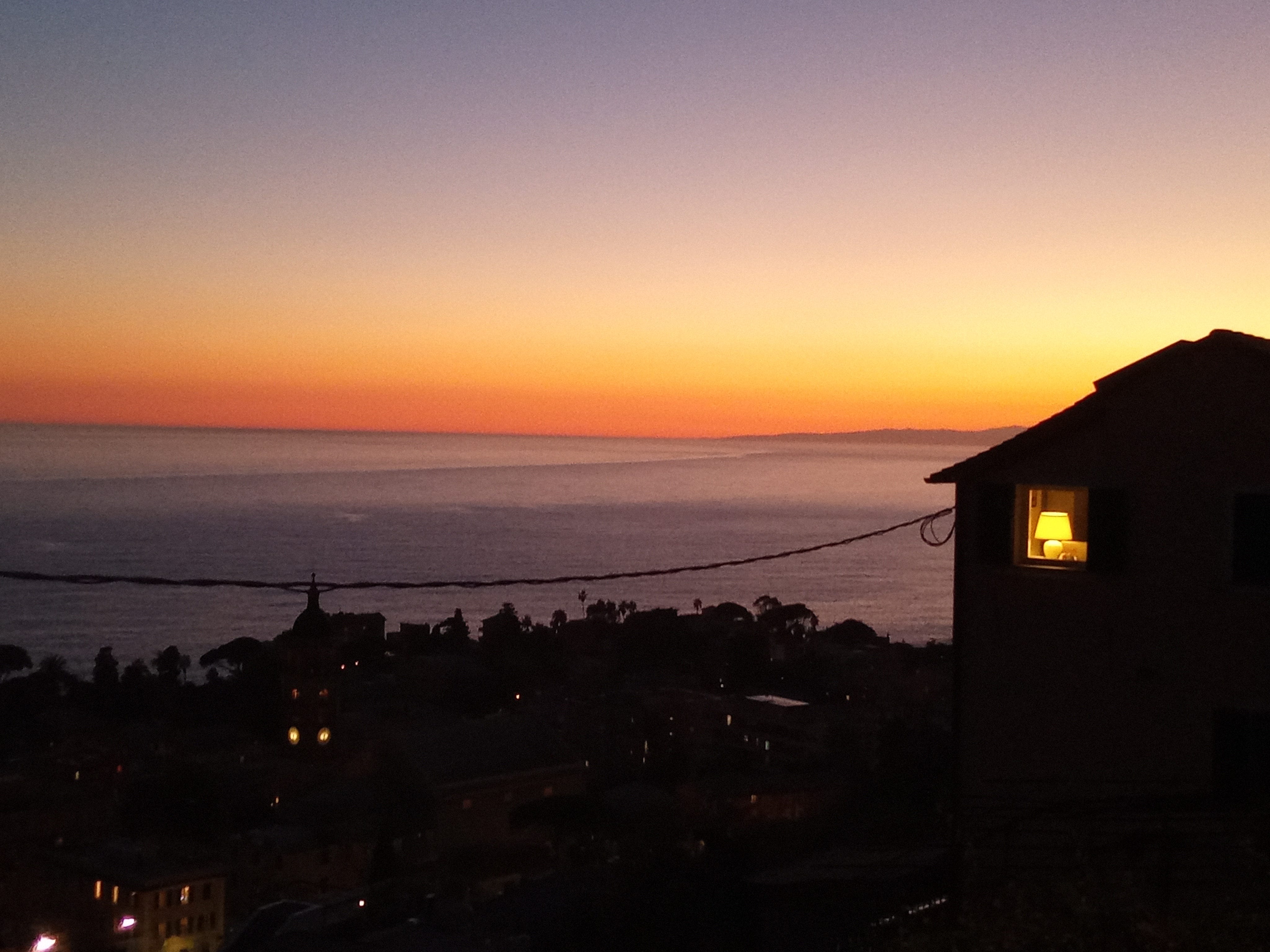
Out-of-context article, hope you will excuse me.
The “hortus conclusus” was the medieval secluded garden, the secular counterpart of the cloister gardens found within monasteries. It was characterized by a space enclosed by thick hedges and high walls, rich with religious symbolism and allegory. This secluded enclave represented an isolated Eden, shielded from the outside world, a reverberation of an age of castles and fortified cities. As the Renaissance embraced perspective and panoramic views, dismantling walls and barriers, a remnant of the hortus conclusus endured in what would be called the “secret garden”, but this is another story.
I spend most of my days working alone in gardens. Admittedly, these spaces are not always delimited by high barriers that prevent my gaze from resting on the distant horizon. Yet, perhaps due to my perpetual isolation from my fellow human beings, I often have the impression of living within a hortus conclusus. Is it perhaps that in this real and metaphorical condition I find a peace of senses, a lost balance with the flow of the whole? Do I find solace in the flight of the bee, in the inescapable rustling of leaves? Perhaps. Usually, I take advantage of modern audio technology, immersing myself in podcasts, insights, and debates of historical, political, and geopolitical nature, as in the ancient days of orally passed down sagas.
Upon my eventual return to the human community, I often realise that my understanding of the world's intricacies far surpasses that of many individuals who spend their days fully immersed in it. This awareness prompts me to question: Who truly resides within a hortus conclusus?
Many individuals appear to have relinquished the practice of observing reality, analyzing its complexities, and most importantly, exercising critical thinking, even against prevailing sentiment. Why does this occur? Could it be to dispel the dread of the future, leading us to cling to a perpetual present adorned with comforting certainties? Revealed truths, demented propaganda.
The dissident Chinese artist Ai Weiwei, censured in liberal (?) Europe for his unaligned stance on recent events in the Gaza Strip, has stated that Western artists can only thrive if they detach their works from reality, by creating what he calls “decorations with a strange aesthetic” that no longer portray reality or evoke people's emotions, a task historically associated with art that appears to be increasingly elusive in today's Western world.
That's it. We are all armoured within our own personal hortus conclusus: we don't hear, we don't see, and frequently, we contemplate self-awareness, well-being, and how to harmonize with ourselves to manage the strains of modern life. I do not understand. Am I doing something wrong? Maybe I am. Or perhaps, does the inner unease we experience, which we alleviate with herbal teas, originate from our reluctance to confront the profound unraveling of worldly realities?
Allow me to provide an example: the European Commission, a remote and inscrutable institution, has recently proclaimed, through its radiant and empyrean representatives, that Europe must rearm itself in order to face phantom and imminent military threats. Setting aside Manichaean narratives, some analysts, less inclined towards hypocrisy, argue that the time has come for the European Union to mature geopolitically. However, I cannot shake the thought of the “security paradox”, a disconcerting phenomenon of the early 1900s that propelled European nation-states into an escalating arms race under the guise of security and deterrence. Indeed, World War I stands as the culmination of such reckless policies.
The similarities to our present are disturbing. No one seems to care.
At times, I reflect on a particularly renowned podcast about Marc Bloch, which I recently revisited. Marc Bloch, a French academic and history professor between the two World Wars, is widely regarded as the progenitor of modern historiography. He was executed by the Nazis in 1944. In a series of correspondences with his colleague and friend Lucien Febvre in the late 1930s, Bloch pondered whether the two of them could indeed organize a certain conference, given the unsettling atmosphere prevailing in Europe. “People at that time felt it coming, felt the looming catastrophe”, the podcast's narrator recounted. When World War II eventually erupted, Bloch blamed himself for not taking action to avert the disaster as an intellectual, lamenting, “At least we could have tried to preach as voices in the desert”, as he purportedly wrote.
I am merely a gardener, observing the world from a window within the hedge encircling my hortus conclusus. What do I see? A sinister black cloud looming on the horizon, reminiscent of that seen from Minas Tirith towards the lands of the Dark Lord. Unfortunately, in this world where goodness is absent, there is more than one Mordor facing off.
It does seem quite inevitable.
How can we change human nature? There's an effect called the 'speed wobble' which affects motorcyclists and skate boarders. It's when you start going too fast and start wobbling so bad that you risk crashing and is extremely difficult to overcome. The thing about it is, it's not based on the board or the bike. It's not the speed. It's all in your head. You lean a little too far one way, and then your brain freaks out and tries to compensate the other way, but since you're full of adrenaline it overcompensates. So, then you overcompensate the other way. Soon you're wobbling all over the place and if you don't stop, you might just crash and burn. To stop the brain from doing that is nearly impossible. That's what it feels like as we head into what might be the next world war. Everyone who's pushing for it is doing it because they fear insecurity, but what they're doing is going to make everything far more insecure. Everyone who isn't paying attention needs to, but they don't want to. How do you get pro-war people to become pro-peace? How do you get pro-peace people to start taking it as seriously as they would a war?
Hello, I just stumbled upon your Substack (via The Tarnished Gloriole). This piece resonated with me: I live in a remote guesthouse in the Brazilian mountain range Mantiqueira, spend a lot of time in our garden (also listening to podcasts, music), and it sometimes feels like I'm watching political changes across the globe from a very far off place. The lack of critical thinking is shocking, especially when I spend time in social media. But I do wonder if it's always been that way and we just notice it more now because of the excessive amount of people online (whereas before we had more of a top down filter and didn't hear as many voices through traditional media.) In any case, I think you are right that many don't seem to care, and many don't know what to do anymore.