Decentralisation is not an original concept
Someone has been applying it successfully for millions of years

What is decentralisation? Most people have no idea what it is. It's an abstract concept, something remote, whose meaning can certainly be deduced from the word, even if it appears completely alien and far removed from everyday life. Wikipedia, which is certainly not an authoritative source of knowledge (but is quite widespread), attributes this concept to politics, to social organization:
decentralisation is the process by which the activities of an organization, particularly those regarding planning and decision-making, are distributed or delegated away from a central, authoritative location or group and given to smaller factions within it.
The paternity of decentralisation's concept seems to be ascribable to libertarianism and is, of course, opposed to centralisation.
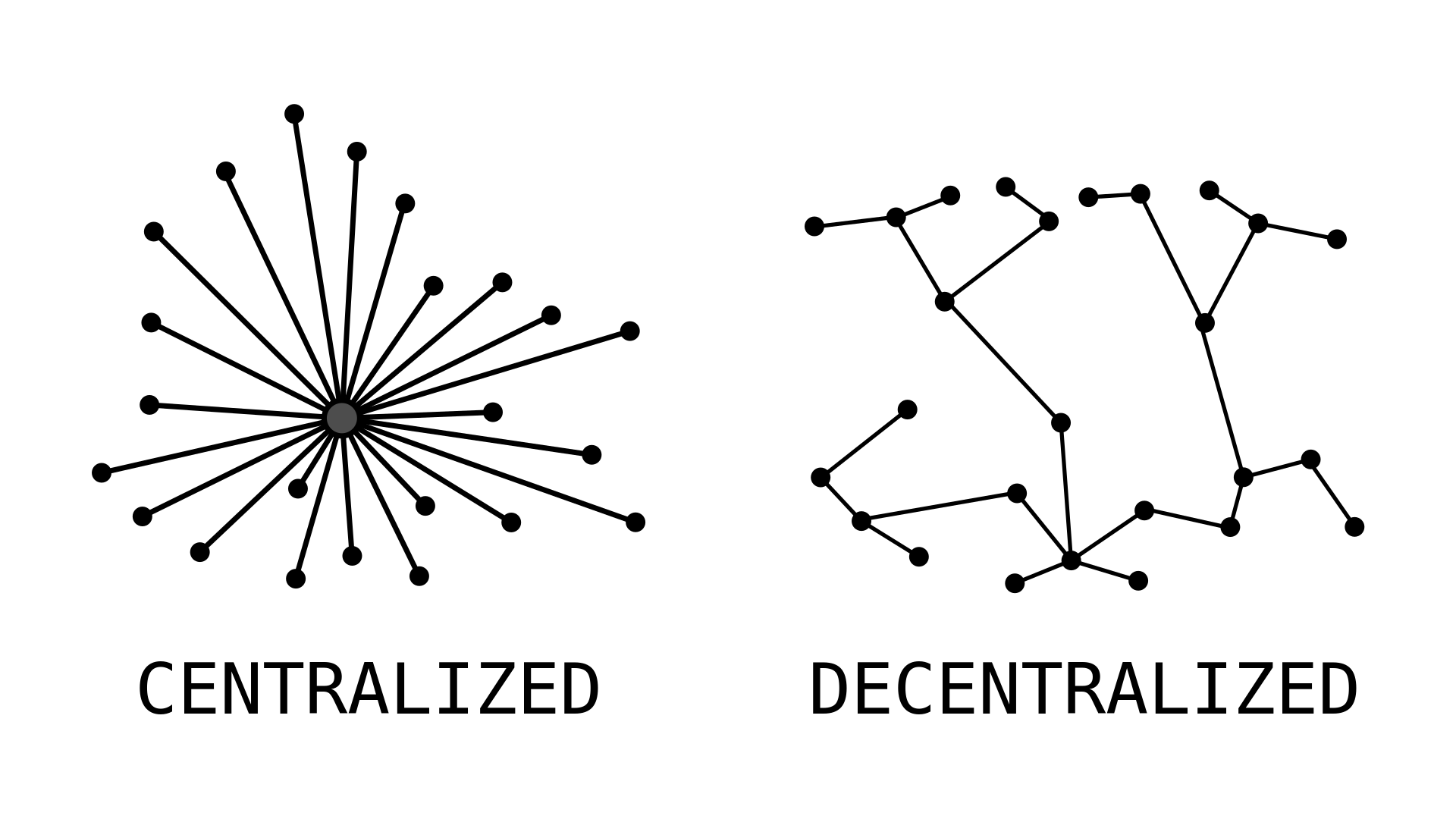
Centralisation, on the other hand, is much easier to understand because it represents the most widespread system of social organization in human societies: there is a central authority from which, tipically, a whole series of hierarchically subordinate elements branch off in a pyramid structure. In our world, almost everything works this way, and not only at the political level. And why does this happen? Don't look at me, to provide an exhaustive answer on the subject, I think it would be necessary to have a solid political, historical, philosophical, anthropological background. The interpretation I can give is that of a gardener who listens to a lot of podcasts...
Perhaps we are drawn to centralisation because it mirrors our animal nature. Let me explain: we are centralised creatures. Or rather, our centralisation has been emphasized throughout our evolutionary history. It is a dependent process of our heterotrophic and mobile nature. In other words, if you're an ancestral creature searching for food in your environment, concentrating your sense organs and main nerve centers in one area of your body would enhance your chances of success, wouldn't it? You could better direct your movements and find something to eat. This explains, among other things, the emergence of bilateral symmetry, a body architecture that has been successful since the appearance of flatworms and beyond, just to give an example.
Now I do not want to bore you with my university zoological reminiscences, but it's true that the animal kingdom has predominantly utilized a hierarchical, centralised organization of body structures. The head directs the other parts of the body, the organs, which are specialised and perform precise and indispensable tasks: this centralisation ensures a crucial speed of decision-making necessary for managing movement, the primary characteristic of animals. However, this top-down organization is inherently fragile because the entire system collapses if one of its components fails.
And what about decentralisation? Where in the world has this extravagance ever been seen? You will be surprised to learn that this system is successfully employed in organisms that make up 82% of the planetary biomass and have members that have survived continuously for as long as 350 million years. These organisms are so successful that they could potentially cover almost the entire landmass of the planet: I’m talking about plants.
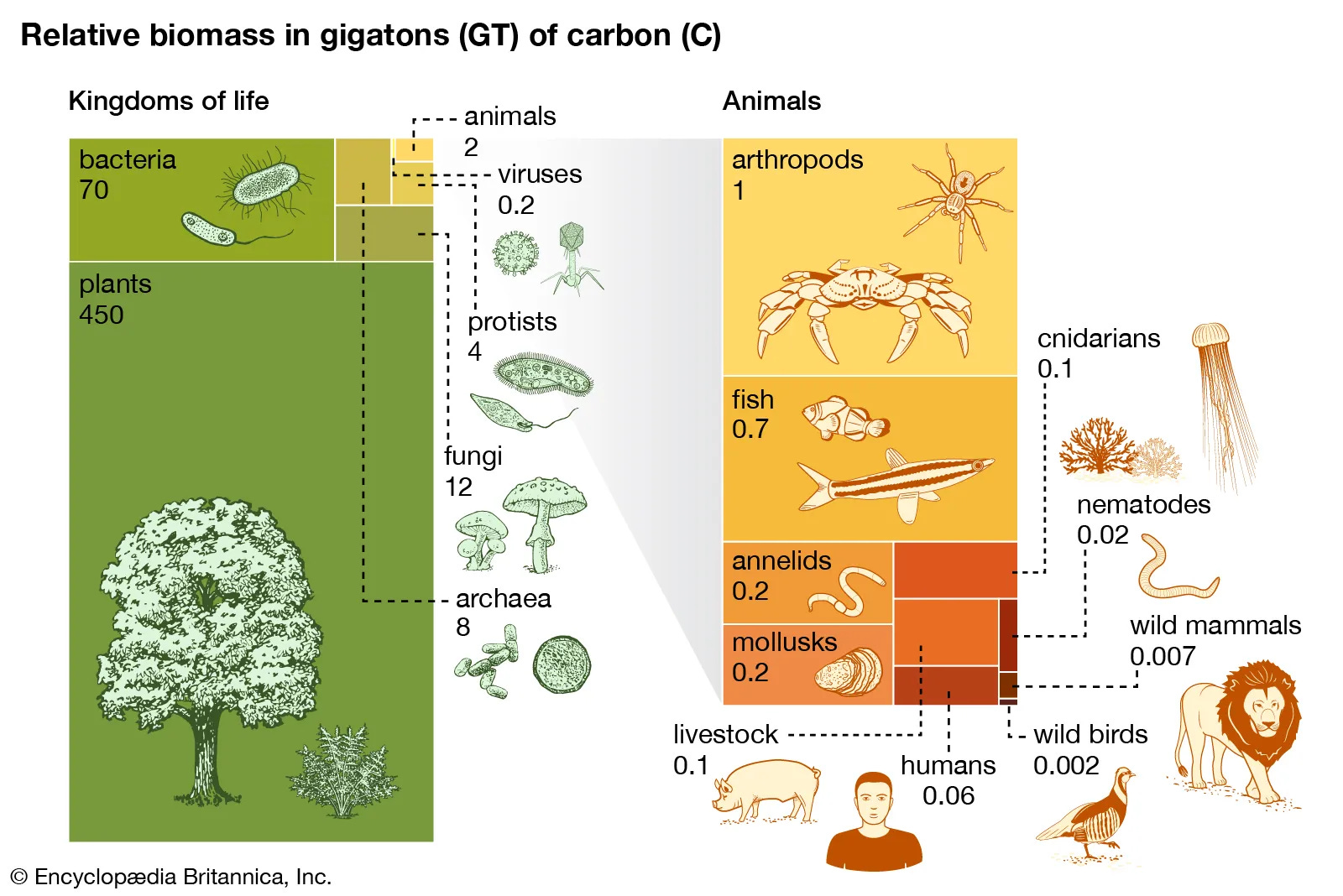
Yes, plants are decentralised organisms.
Thanks to their capacity for photosynthesis, which makes them energetically independent, plants do not need to move in search of food. However, the fact that they are rooted to the ground has fundamental consequences. Plants cannot escape from threats, just as they cannot move to places more favorable to their survival. They lack the possibility of adopting the system that animals employ to overcome all difficulties, namely movement.
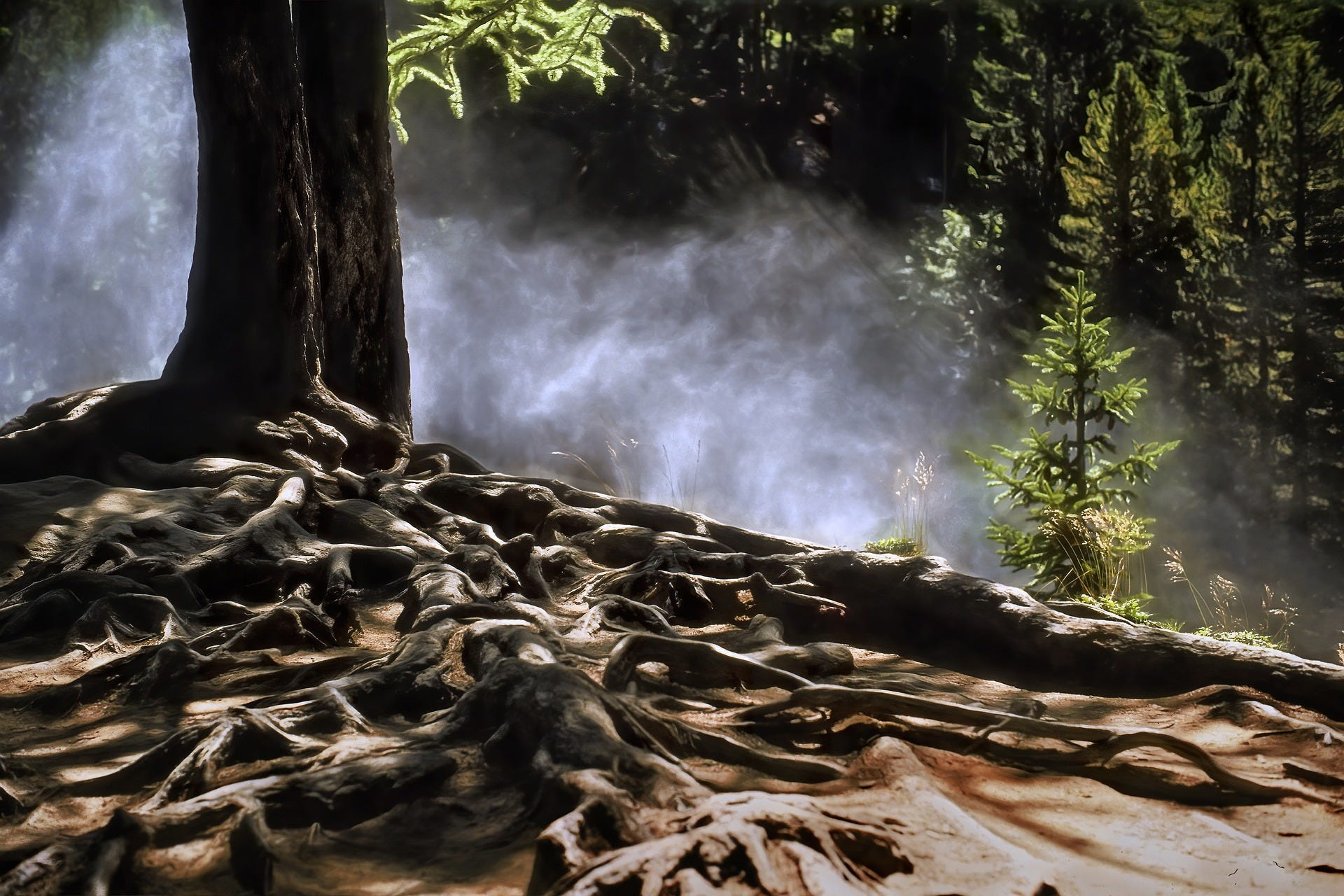
So how can they defend themselves against predators and dangers? The strategy lies in possessing a diffuse and redundant body architecture that distributes throughout the body all those functions that animals concentrate in a few specialised organs: a modular structure with components that are repeated countless times to form extensive and complex networks. The root systems, consisting of an incalculable number of apices that autonomously extend into the soil in search of water and nutrients, are a clear example of this. The architecture of the foliage also follows the same rule of diffusion of tasks through the repetition of similar modules.
Admittedly, such a structure is not very efficient and has a rather slow response capacity to stimuli. However, it demonstrates extraordinary strength and resilience, which is unthinkable for any animal organism. In fact, plants can endure a great deal of damage to their structures, including the removal of large percentages of their bodies, without succumbing. This is why they are so forgiving of poorly executed pruning, and they can regenerate an entire individual from small portions of themselves, such as cuttings.
In conclusion: decentralization works, especially for entities that don't have to worry about solving Vitalik Buterin's trilemma.